SecurityContextHolder
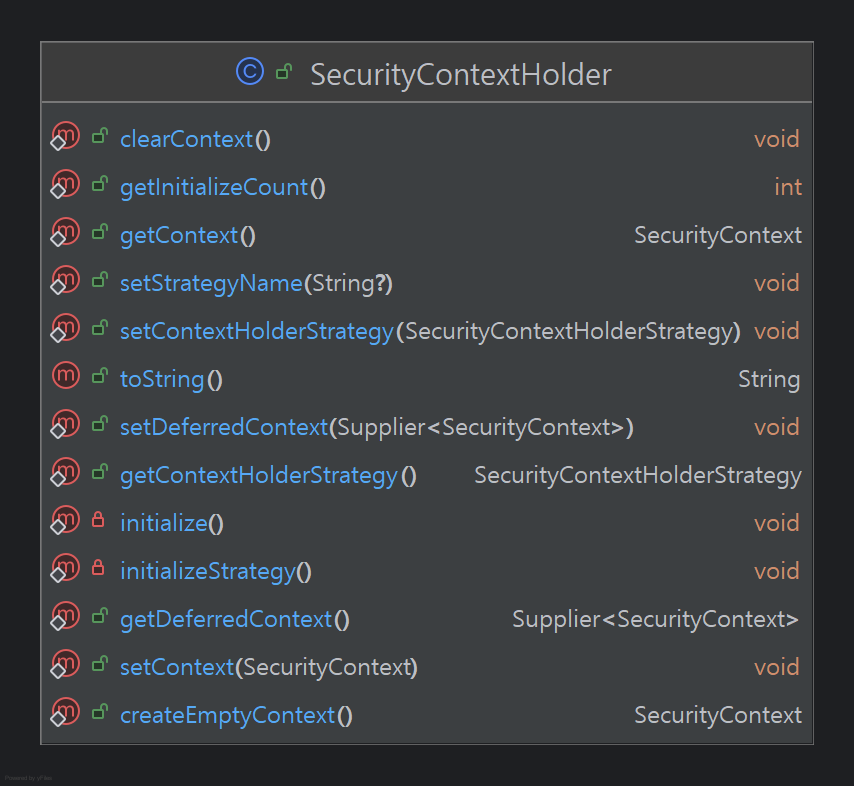
SecurityContext 객체를 저장하고 감싸고 있는 wrapper 클래스이다.
실질적인 인증 정보는 Authentication이 갖고 있다.
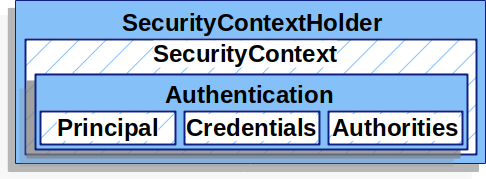
https://docs.spring.io/spring-security/reference/servlet/authentication/architecture.html
SecurityContext
Authentication 객체가 저장되는 보관소로 필요 시 언제든지 Authentication 객체를 꺼내어 쓸 수 있도록 제공되는 클래스
사용자당 SecurityContext가 생성되며 객체들은 하나의 SecurityContextHolder에서 관리
public interface SecurityContext extends Serializable {
	@Nullable Authentication getAuthentication();
	void setAuthentication(@Nullable Authentication authentication);
}
생명주기
사용자의 요청이 서버로 들어오면 생성되고, 처리가 끝난 후 응답되는 순간에 초기화 된다.
Authentication
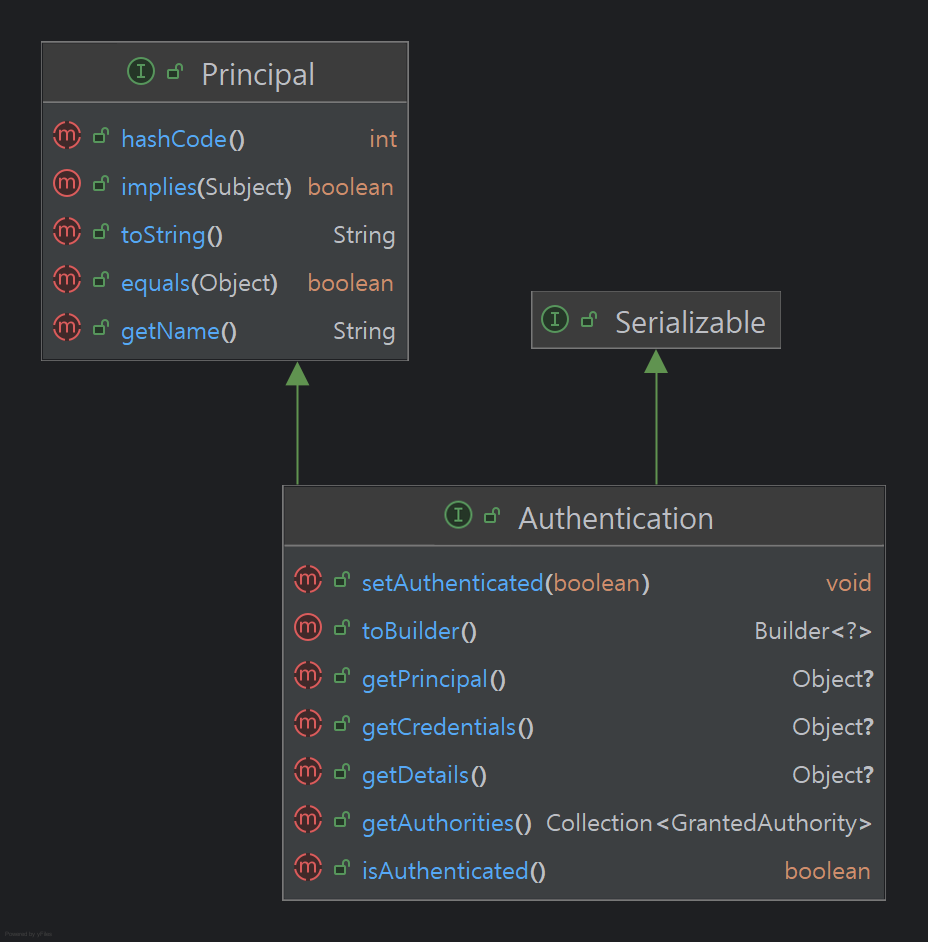
사용자 정보를 저장하는 객체이다.
1. principal: 사용자 아이디 혹은 User객체를 저장
2. credentials: 증명 (사용자 비밀번호, 토큰)
3. authorities: 인증된 사용자의 권한 목록
4. details: 인증 부가 정보
5. authenticated: 인증 여부(Bool)
내부 메서드가 전부 static으로 선언되어 아래와 같이 가져와 사용할 수 있다.
Object principal = SecurityContextHolder.getContext().getAuthentication().getPrincipal();
Collection<? extends GrantedAuthority> authorities = SecurityContextHolder.getContext().getAuthentication().getAuthorities();
Object credentials = SecurityContextHolder.getContext().getAuthentication().getCredentials();
전략 패턴 사용
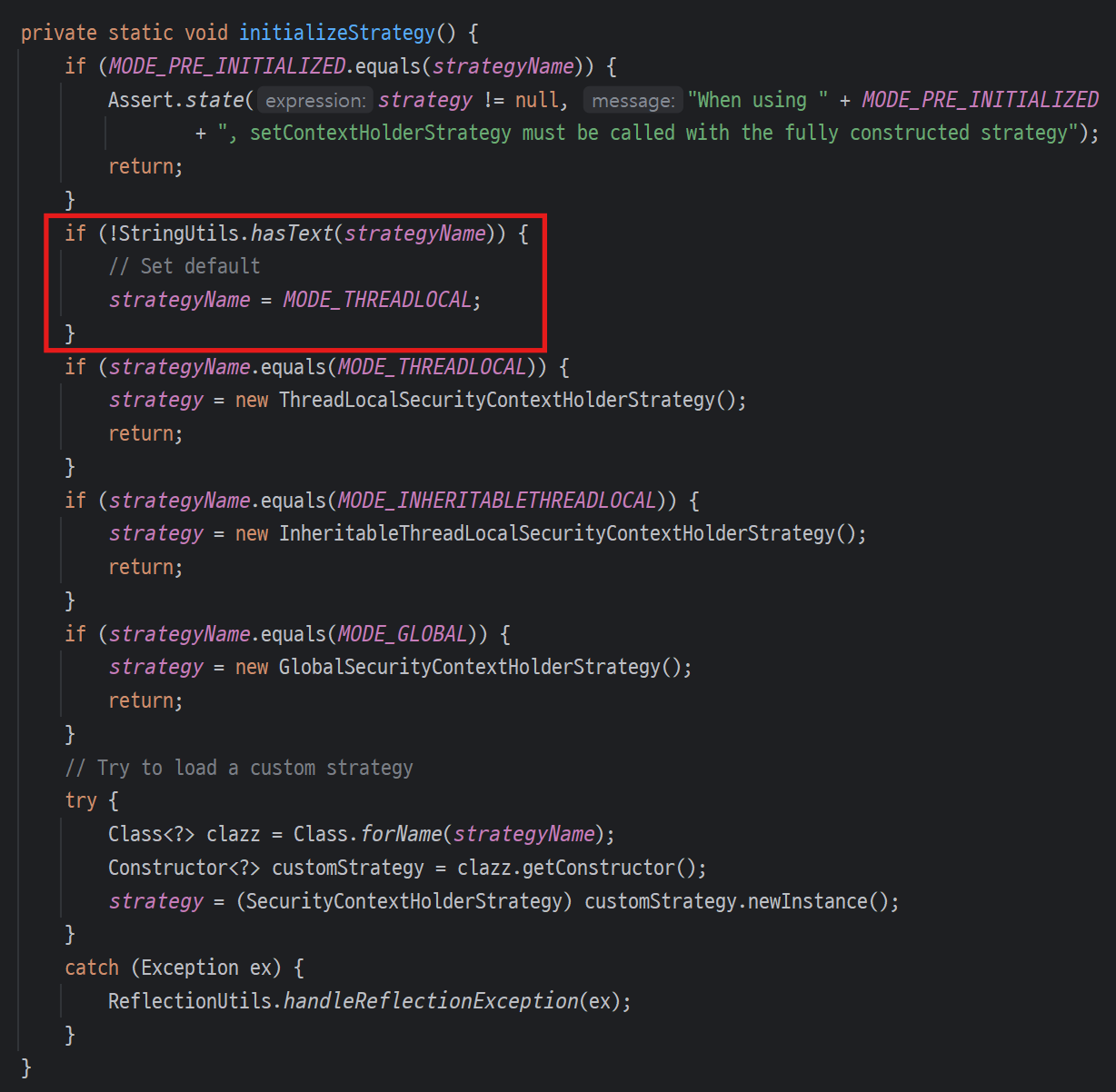
SecurityContextHolder의 내부 코드를 살펴보면 인증 객체를 직접 가져오는 것이 아닌 strategy 객체에 책임시키는 구조로 설계된 것을 확인할 수 있다.
private static SecurityContextHolderStrategy strategy = new ThreadLocalSecurityContextHolderStrategy();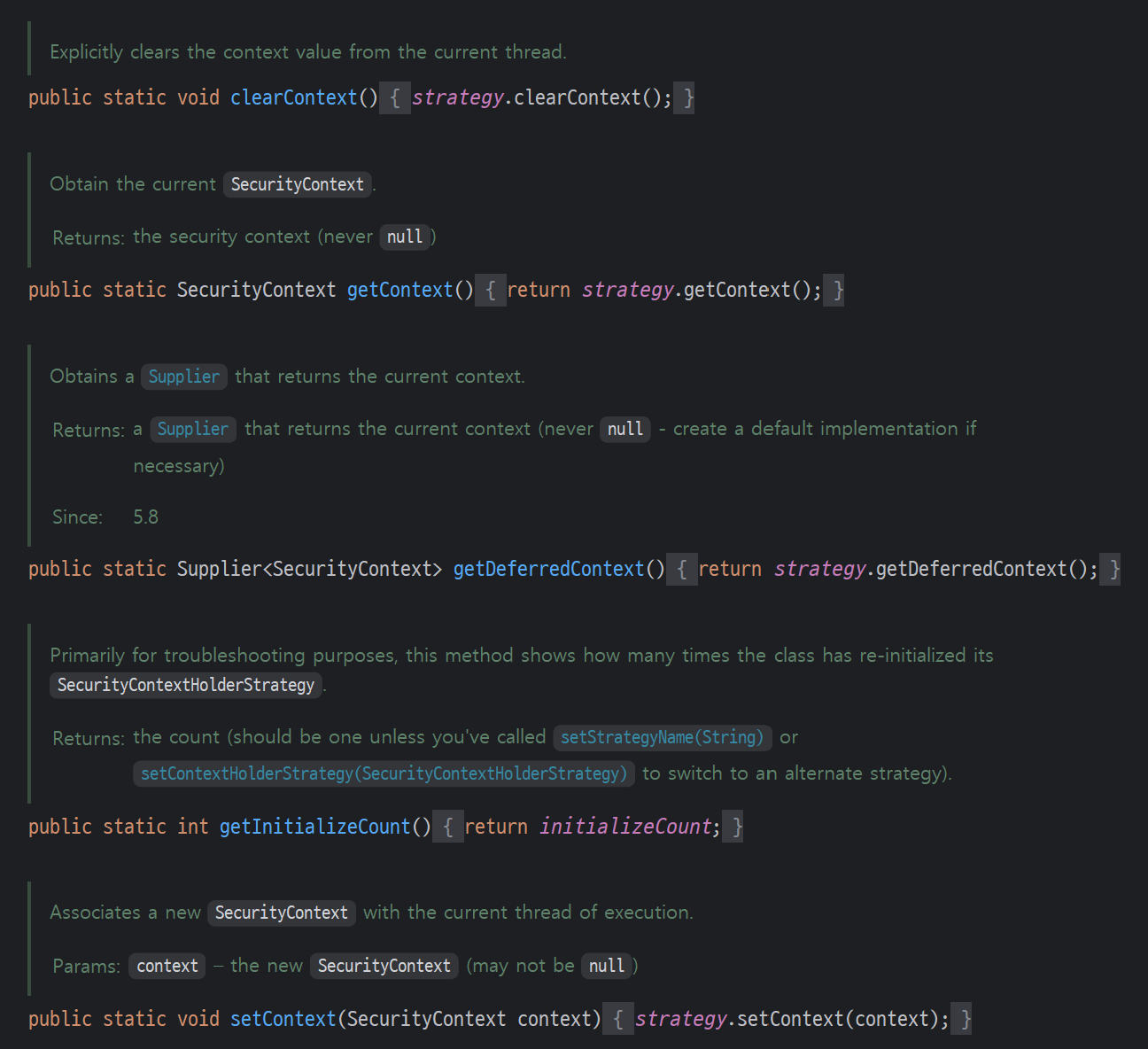
이는 사용자별로 다른 저장소에 저장해야 하는 구조를 고려한 확장성이다.
기본적으로 ThreadLocal 방식을 사용한다.
ThreadLocalSecurityContextHolderStrategy에서 SecurityContext를 ThreadLocal로 저장되는걸 확인할 수 있다.
private static final ThreadLocal<Supplier<SecurityContext>> contextHolder = new ThreadLocal<>();출처 및 참고자료
https://cafe.naver.com/xxxjjhhh/53
https://dgjinsu.tistory.com/90